If you’re eyeing a monitor upgrade, you’ve probably wondered: Is 165Hz good for gaming — or are you missing out on something better?
With so many options available today, choosing the right refresh rate can feel confusing. Some people say 60Hz is enough, others recommend 144Hz, and many gamers now prefer 165Hz. So what’s the real difference, and does it actually improve your gaming experience?
The simple answer is yes — a 165Hz monitor can make your gameplay much smoother and more responsive. But whether it’s the right choice depends on how you play and what system you use.
In this detailed guide, you’ll learn what 165Hz really means, how it compares to other refresh rates, and whether it’s worth your money. Let’s start by understanding the basics behind the number.
What Does 165Hz Mean?
To understand the value of a 165Hz monitor, you first need to understand the refresh rate.
A 165Hz refresh rate means your monitor updates the image on the screen 165 times every second. Each update shows a new frame, which creates motion.
Think of it like flipping through images very quickly. The more images you see per second, the smoother the motion appears.
Older monitors used 60Hz as the standard. That means only 60 updates per second. While that is fine for basic use, it starts to feel slow when you play modern games.
With 165Hz, everything becomes faster and more fluid. Movements look cleaner, and transitions feel more natural.
How 165Hz Refresh Rate Improves Gaming
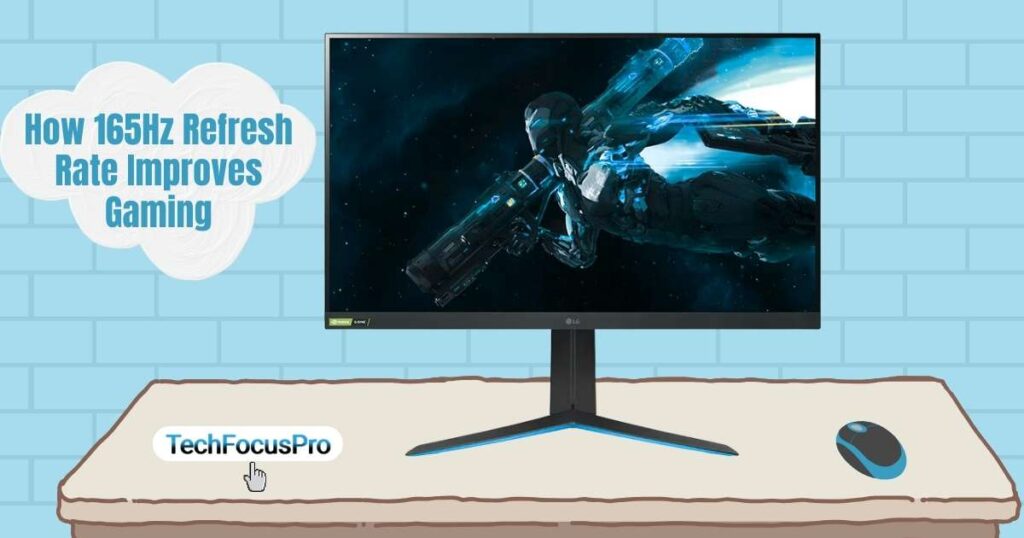
When you switch from a lower refresh rate to 165Hz, the difference is not just technical. You can actually feel it while playing.
The most noticeable improvement is smoothness. When you move your camera in a game, the motion feels continuous instead of slightly choppy. This is especially important in fast games where every movement matters.
Another major benefit is clarity. At lower refresh rates, fast-moving objects can appear blurry. A 165Hz monitor reduces this blur, making it easier to track enemies or objects on the screen.
It also improves responsiveness. Your actions appear on the screen faster, which can make your gameplay feel more connected and precise.
165 Hz to FPS – Why It Matters
Many gamers confuse refresh rate with FPS, but they are not the same thing.
- Refresh rate (Hz) is what your monitor can display.
- FPS (frames per second) is what your PC or console produces.
For the best experience, both need to work together.
If your monitor supports 165Hz but your game only runs at 60 FPS, you won’t fully benefit from it. On the other hand, if your system can produce high FPS, a 165Hz monitor allows you to actually see those extra frames.
This is why understanding 165 Hz to FPS is important. The closer your FPS is to 165, the smoother your experience will be.
Is 165Hz Good for Gaming?
Absolutely! A monitor with 165Hz is good for gaming, especially if you play fast-paced or competitive games.
Games like shooting games, racing games, and action titles benefit the most from higher refresh rates. In these games, even a small delay or blur can affect your performance.
With 165Hz, gameplay feels more responsive and controlled. You can react faster and track movement more easily.
However, if you mostly play slow-paced or story-based games, the difference may not feel as dramatic. The game will still look good, but smoothness may not be as critical.
165Hz vs 60Hz vs 144Hz – Full Comparison
To understand where 165Hz stands, it helps to compare it with other common refresh rates.
| Feature | 60Hz Monitor | 144Hz Monitor | 165Hz Monitor |
| Smoothness | Basic | Very Smooth | Ultra Smooth |
| Motion Clarity | Average | Clear | Very Clear |
| Input Lag | Higher | Low | Very Low |
| Best For | Casual Use | Gaming | Competitive Gaming |
| Hardware Demand | Low | Medium | Medium-High |
The biggest jump is from 60Hz to 144Hz or 165Hz. That change feels very noticeable.
The difference between 144Hz and 165Hz is smaller, but still useful for players who want the smoothest possible experience.
Real-World Gaming Experience with 165Hz
Fire up your favorite game on a 165Hz monitor, and everything bursts to life—the action is smoother, movement more natural, and every moment more exciting.
When you turn your character quickly, the screen stays smooth instead of breaking into small jumps. When you aim at a moving target, it becomes easier to follow.
In competitive games, this can give you an advantage. You can react faster because what you see on the screen updates more quickly.
However, the improvement also depends on your hardware. If your system cannot deliver high frame rates, the difference will be less noticeable.
Benefits of 165Hz Refresh Rate
A 165Hz monitor offers several practical benefits for gamers:
- Smoother gameplay experience: Motion looks more fluid and natural, especially during fast camera movements.
- Reduced motion blur: Fast-moving objects stay clearer, making it easier to track enemies or targets.
- Lower input lag: Your actions appear on screen faster, giving you better control and quicker reactions.
- More consistent performance: Small drops in FPS feel less noticeable, so gameplay stays smooth instead of stuttering.
- Less screen tearing with sync support: Technologies like G-Sync and FreeSync help match refresh rate with FPS for a cleaner, tear-free display.
When 165Hz Might Not Be Worth It
Even though 165Hz is great, it is not always necessary.
If you are using a low-end PC that struggles to reach high FPS, a 165Hz monitor will not show its full potential. In that case, a 60Hz or 75Hz monitor may be enough.
It may also not be essential for players who mainly enjoy slow-paced games. In those games, visual quality and resolution often matter more than refresh rate.
Budget is another factor. If you are trying to save money, a good 144Hz monitor can still offer an excellent experience.
What You Need to Run 165Hz Properly
To fully enjoy a 165Hz refresh rate, your setup needs to support it.
You need a capable graphics card that can produce high frame rates. Your processor should also be strong enough to handle modern games without bottlenecks.
Connection type matters too. Most 165Hz monitors require DisplayPort or a newer version of HDMI to run at full refresh rate. You should also make sure your monitor settings are correctly configured, as some displays do not run at 165Hz by default.
Game settings play a role as well. Lowering certain graphics settings can help you reach higher and more stable FPS, which allows you to take full advantage of the refresh rate.
Without the right setup, you may not be able to use 165Hz fully.
165Hz vs 240Hz – Which One Should You Choose?
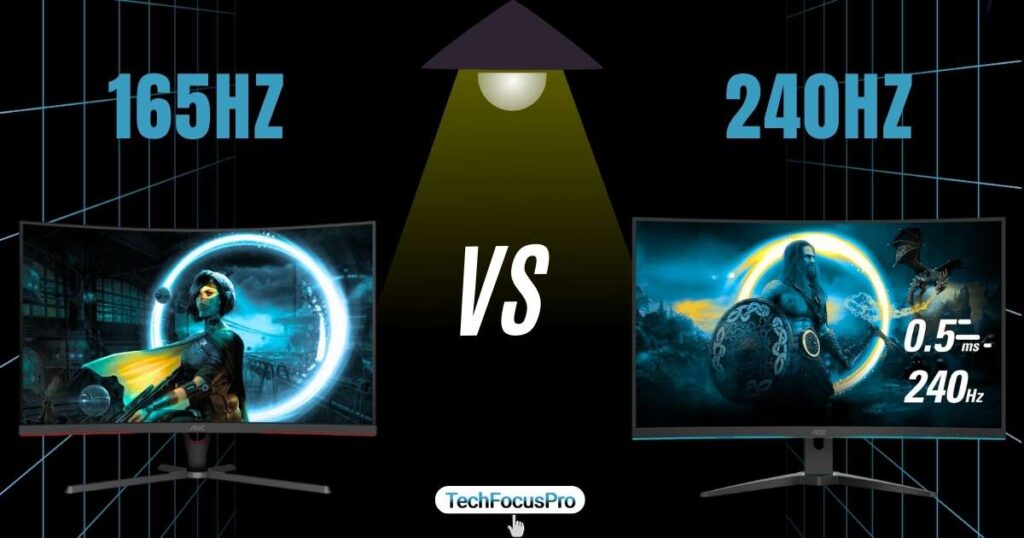
Some gamers consider going even higher, like 240Hz.
While 240Hz is faster, it also requires much more powerful hardware. The difference between 165Hz and 240Hz is also less noticeable compared to the jump from 60Hz to 165Hz.
In real gameplay, the gap between 165Hz and 240Hz is hard to notice for most people. If you sit in front of both monitors, you may see a slight improvement, but it won’t feel like a big upgrade during normal play.
You’ll only feel the real benefit of 240Hz in highly competitive games like Valorant or CS2, where every tiny movement matters. Even then, the difference is mostly noticeable for pro or high-level players.
For casual and even regular competitive gamers, 165Hz already feels very smooth and responsive. It gives you a strong gaming experience without needing extremely high FPS or expensive hardware.
Common Mistakes About 165Hz
Many people misunderstand how refresh rates actually work, which often leads to wrong expectations when buying a monitor.
One common belief is that a higher refresh rate improves graphics quality. This is not true. A 165Hz monitor does not make textures sharper or colors better. It only makes the motion smoother. Visual quality still depends on resolution, panel type, and graphics settings.
Another mistake is thinking you must always reach 165 FPS to benefit from a 165Hz refresh rate. While matching FPS with refresh rate gives the best results, even lower frame rates like 90 or 120 FPS will still feel smoother compared to a 60Hz display.
Some users also expect a massive difference when upgrading from 144Hz to 165Hz. In reality, the jump is small. The biggest improvement is when moving from 60Hz to higher refresh rates. Beyond that, changes become more subtle.
A very common misunderstanding is ignoring hardware limits. People buy a 165Hz monitor but use it with a low-end PC that cannot produce high FPS. In that case, the monitor cannot deliver its full value.
Lastly, some gamers think a higher refresh rate automatically makes them better at games. While it helps with smoother visuals and faster response, skill and practice still matter more than hardware.
Who Should Buy a 165Hz Monitor?
A 165Hz monitor is best suited for gamers who want smoother and faster gameplay.
If you play competitive games regularly, it can improve your performance and experience. If you already have a decent PC, upgrading to 165Hz is a smart move.
On the other hand, if you only play occasionally or prefer slow games, you may not need it.
Frequently Asked Questions
What does 165Hz mean?
165Hz means your monitor refreshes the screen 165 times every second. Each refresh shows a new frame, which makes motion look smoother and more fluid.
In simple terms, a higher refresh rate, like 165Hz, helps reduce blur and makes movements in games feel faster and more responsive compared to lower refresh rates, like 60Hz.
How good is 165 Hz for gaming?
165Hz is very good for gaming, especially for fast-paced titles like FPS and racing games. It makes gameplay smoother, reduces blur, and improves reaction time. For most gamers, it offers a great balance between performance and cost.
What’s better, 165Hz or 240Hz?
240Hz is technically faster, but the difference is small in real use. It also requires a very powerful PC to reach high FPS. For most players, 165Hz is more practical and still delivers a very smooth gaming experience.
Is 165 Hz or 180 Hz better?
180Hz is slightly faster than 165Hz, but the difference is very minor. Most users won’t notice a real change during gameplay. Both are great options, so the better choice depends more on price and monitor quality.
How many FPS can 165Hz get?
A 165Hz monitor can display up to 165 FPS for the smoothest experience. However, even if your game runs at a lower FPS, like 100–120, it will still feel smoother than a 60Hz display.
Final Verdict
A 165Hz monitor is a strong choice for most gamers who want smoother and more responsive gameplay. It offers a clear upgrade over 60Hz, especially in fast-paced games where movement and reaction time matter. While the difference compared to 144Hz is smaller, it still adds a slight edge in smoothness.
For competitive players, 165Hz can improve tracking and control, making gameplay feel more precise. At the same time, it does not demand as much power or budget as higher options like 240Hz.
However, its full benefit depends on your PC’s ability to deliver high FPS. Without that, the improvement will be limited.