CILFQTACMITD is a term many people encounter online and find puzzling at first. The name appears complex, making it difficult to grasp its meaning or purpose. As a result, users often search for CILFQTACMITD seeking straightforward and reliable information.
Simply put, CILFQTACMITD is associated with helping people manage tasks, interpret information, or create organization. It is not reserved only for specialists. Everyday users can benefit once they understand its function.
People typically want to know what CILFQTACMITD addresses because they see it referenced in tools, systems, or online material without a real explanation. This sparks curiosity and sometimes uncertainty. That’s why a clear introduction matters.
In this guide, we will explain CILFQTACMITD in an easy way, without using hard words or technical language. By the end, you’ll have a simple understanding of what it is, why it exists, and how it can be useful in everyday situations.
What Is CILFQTACMITD?
CILFQTACMITD stands for Configurable Intelligent Layered Framework for Quantitative Tracking and Adaptive Cognitive Management in Integrated Technology Domains.
It describes a system or concept that helps people process information more effectively. Although the name seems intimidating, its intent is straightforward. It aims to simplify, not complicate.
At its core, CILFQTACMITD organizes tasks, data, or sequences so users can see what needs their attention. Rather than juggling scattered or vague information, it provides a clear structure. This keeps people focused and prevents errors.
Many users first encounter CILFQTACMITD online without context. Because of this, they are unsure if it’s a tool, a process, or a term. Usually, it serves as a support system that guides users and streamlines their management.
What does CILFQTACMITD Help With?
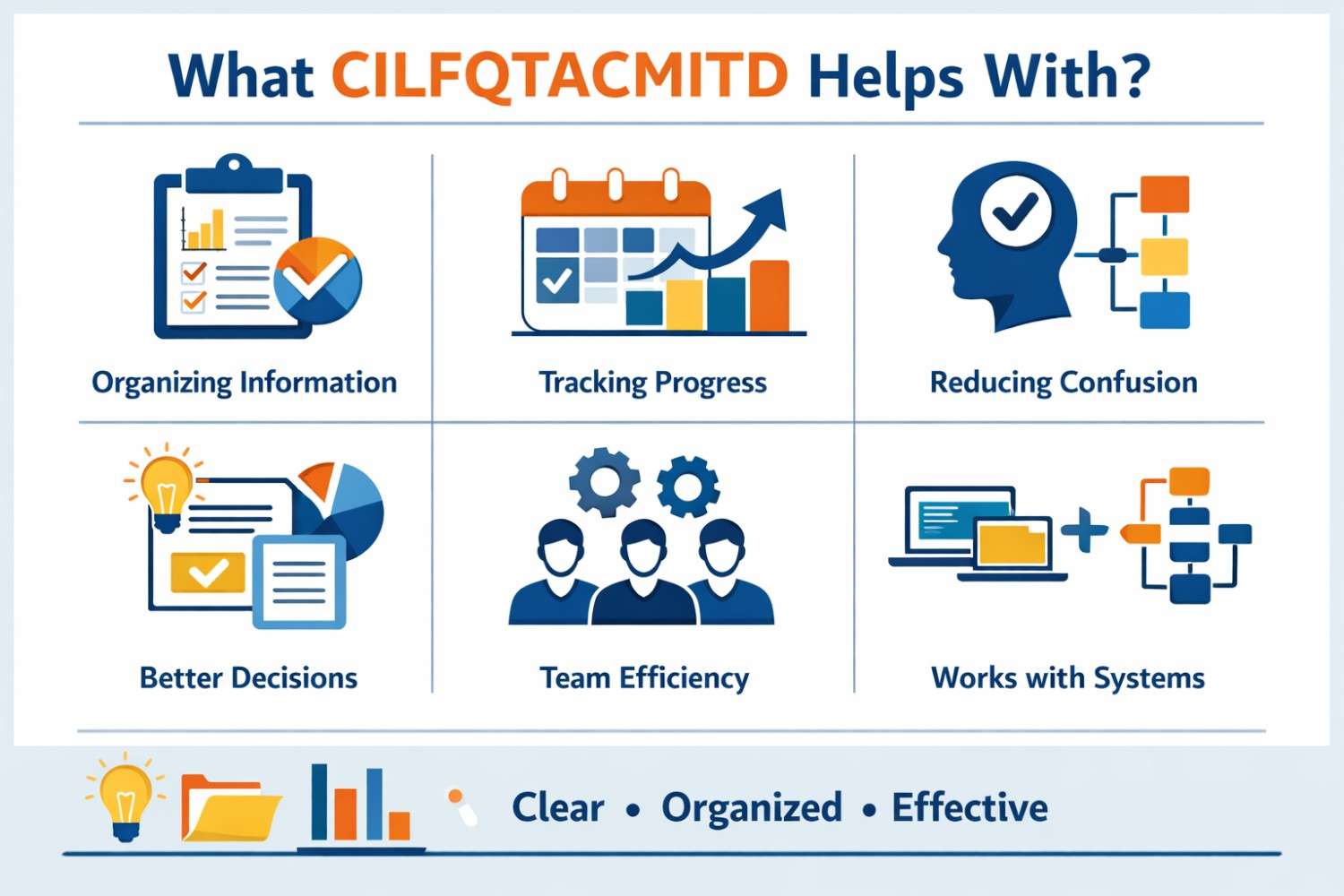
Based on the given description, CILFQTACMITD helps with tracking, organizing, and managing data across complex systems.
It is mainly used to:
- Track numbers and performance data: It helps collect and follow measurable information like usage, progress, or system activity.
- Organize information in layers: Data is arranged in clear sections, which makes it easier to understand and manage.
- Adjust systems based on results: When data changes, the system can respond and adapt instead of staying fixed.
- Support smarter decision-making: Clear tracking and structured data help users decide what actions to take next.
- Manage connected technologies together: It helps keep different tools or systems working in sync instead of separately.
CILFQTACMITD helps people keep data and systems organized, making it easier to monitor, manage, and respond to changes effectively.
CILFQTACMITD and Problem Solving (Real Example)
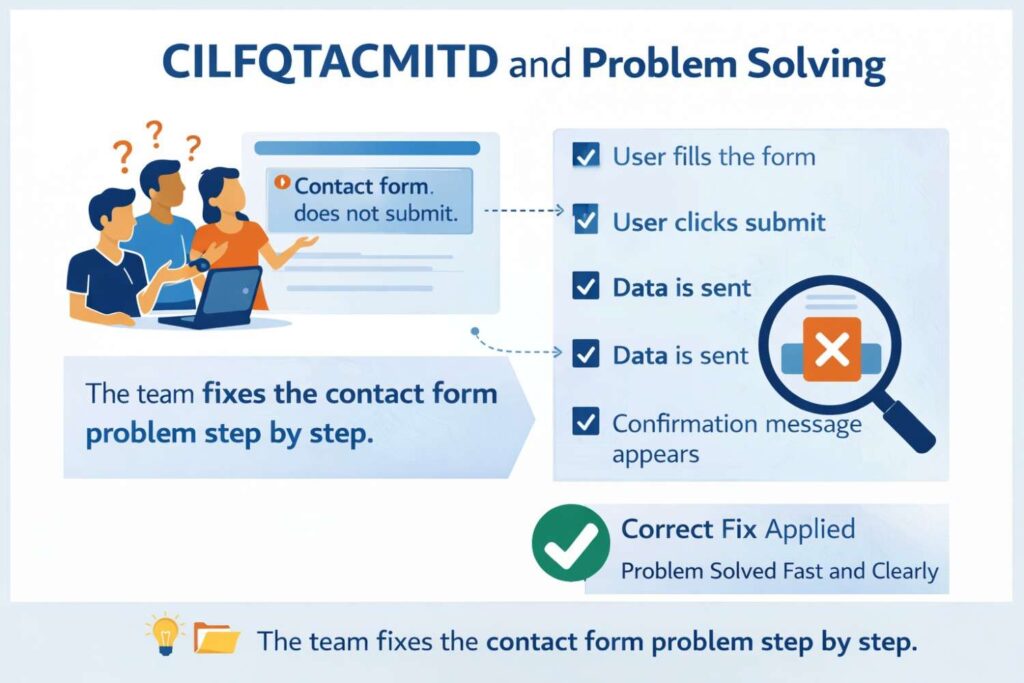
A team notices that users are not able to submit a contact form on a website. The problem is reported, but no one knows where the issue is coming from.
Using CILFQTACMITD, the problem is handled step by step:
- The problem is clearly defined.
The issue is written down as: “The contact form does not submit.”
- The process is broken into parts.
- User fills the form
- User clicks submit
- Data is sent
- Confirmation message appears
- Each step is checked one by one.
The team tests each step instead of guessing.
- The exact issue has been found.
The submit button works, but the data is not being sent.
- The correct fix is applied.
The missing setting is corrected, and the form starts working again.
Because CILFQTACMITD keeps problems organized, the team avoids random fixes and saves time.
Result:
The problem is solved faster, with fewer mistakes, and without confusion.
CILFQTACMITD in Daily Use
Daily, CILFQTACMITD helps people check progress, track numbers, and adjust actions as they work.
Real daily-use example:
A team member starts the day by opening a dashboard powered by CILFQTACMITD, seeing simple numbers on tasks completed, tasks pending, and system status that update throughout the day.
If progress slows down, the user notices it quickly and changes their next steps. If everything is running normally, no action is needed. At the end of the day, the user reviews the same system to confirm what was completed.
CILFQTACMITD becomes a routine part of daily work, helping users stay updated and make informed decisions for both small and larger tasks.
Key Benefits of CILFQTACMITD for Business
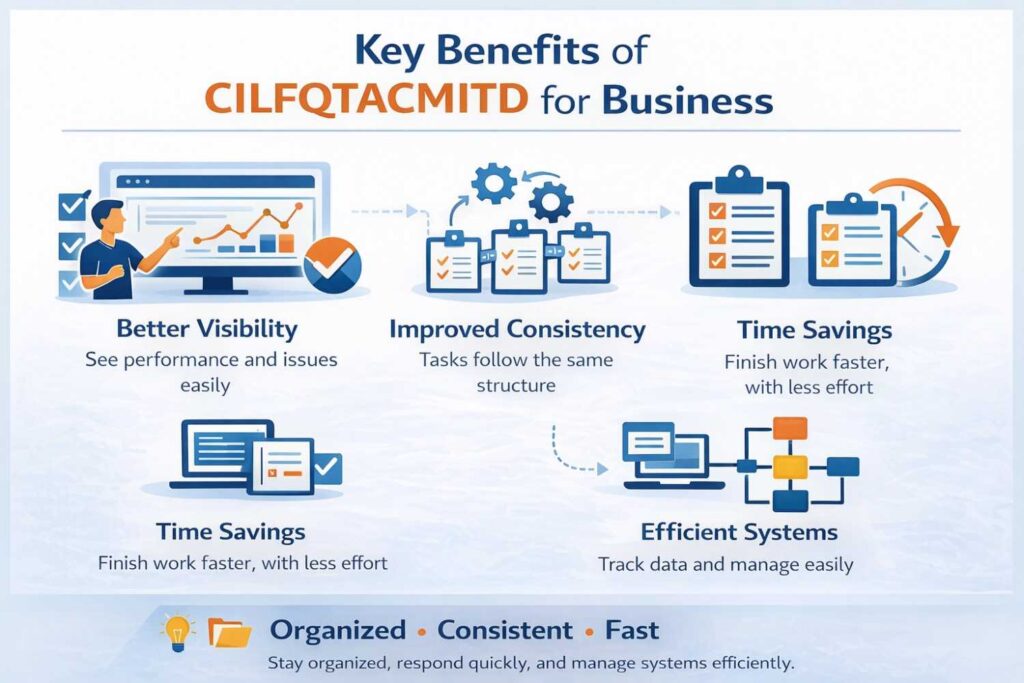
CILFQTACMITD helps businesses work in a more organized and controlled way. When data and systems are managed in one clear structure, teams spend less time figuring out what is happening and more time taking action.
One key benefit is better visibility. Businesses can see performance, progress, and issues without waiting for separate reports. This makes it easier to respond quickly when something needs attention.
CILFQTACMITD also improves consistency. Tasks and processes follow the same structure every time, which reduces errors and keeps results stable. This is especially helpful when teams grow or systems become more complex.
Another benefit is time savings. By tracking data automatically and reducing repeated work, businesses can complete daily operations faster and with less effort.CILFQTACMITD helps businesses stay organized, respond quickly, and manage systems efficiently.
Sector-Specific Impact of CILFQTACMITD
| Sector | How CILFQTACMITD Is Used | Impact |
| Business & Operations | Tracks performance, workflows, and daily tasks | Improves efficiency and reduces confusion |
| Technology | Monitors systems and organizes technical data | Helps systems run smoothly and reduces errors |
| Finance | Tracks numbers, reports, and trends | Supports accurate planning and decision-making |
| Healthcare & Services | Manages records, schedules, and updates | Improves reliability and coordination |
| Education | Organizes data and tracks progress | Keeps records clear and easy to manage |
| Logistics & Supply Chain | Tracks movement, status, and updates | Improves visibility and faster response |
| Marketing & Analytics | Tracks campaign data and performance | Helps measure results and adjust strategies |
How to Implement CILFQTACMITD
Identify What Needs Tracking
Start by clearly defining what information or activities need better control. This could include progress updates, performance numbers, system status, or daily tasks. When this step is done properly, it becomes easier to understand the real problem instead of guessing. Clear goals at this stage help avoid confusion later.
Organize Information Clearly
Once the important data is identified, arrange it in a clean and logical structure. Related information should be grouped together so it is easy to read and manage. Each group should have a clear purpose, such as tracking progress or reviewing results. A good organization makes the framework easier to use on a daily basis.
Apply It on a Small Scale
Instead of using CILFQTACMITD everywhere at once, start with one area. This could be a single team, process, or system. Testing on a small scale helps identify issues early and reduces risk. It also allows users to become familiar with the framework before wider use.
Guide Users on Daily Use
Users should be shown how to interact with the system during normal work hours. This includes checking updates, reviewing tracked data, and knowing when to take action. The focus should be on simple daily tasks rather than complex setups. Clear guidance helps users stay consistent.
Review and Improve Regularly
After implementation, results should be checked regularly. Look for areas where the data is unclear, or steps are slowing down work. Small adjustments can be made to improve clarity and performance. Regular review keeps the framework useful and aligned with daily needs.
Common Misunderstandings About CILFQTACMITD
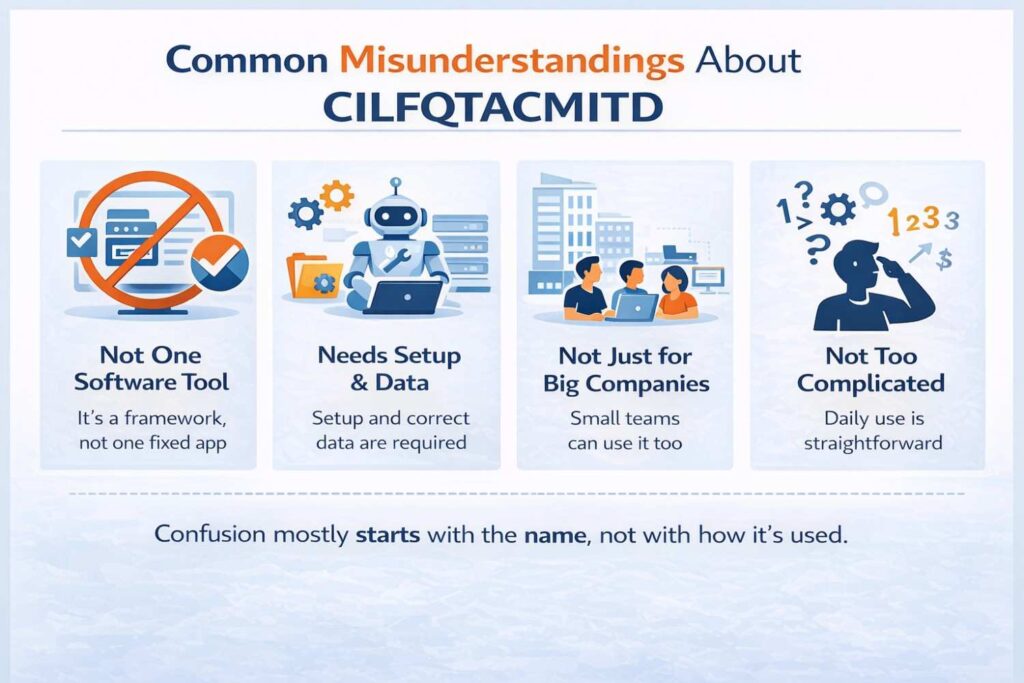
One common misunderstanding is that CILFQTACMITD is a single software tool. In reality, it is a framework, which means it provides a structure that different systems can follow rather than being one fixed app.
Another misunderstanding is that CILFQTACMITD works on its own without setup. It still needs proper configuration and correct data to work effectively. It supports systems, but it does not replace human control.
Some people also think CILFQTACMITD is only for large companies. In fact, it can be used by smaller teams as well, as long as they need clear tracking and organized systems.
There is also confusion that CILFQTACMITD is too complex for regular users. While the name is complex, daily use focuses on simple actions like checking progress and tracking numbers.
Overall, most misunderstandings come from the name itself, not from how CILFQTACMITD is actually used.
The Future of CILFQTACMITD
The future of CILFQTACMITD is likely focused on wider use and better integration, rather than sudden changes. As systems and data continue to grow, the need for clear tracking and organization will also increase. This makes structured frameworks like CILFQTACMITD more useful over time.
In the future, CILFQTACMITD may be applied more consistently across different sectors. Instead of being used in isolated areas, it can become part of standard workflows where tracking and monitoring are required.
Another expected direction is a simpler implementation. As users become more familiar with structured frameworks, applying CILFQTACMITD can become easier and more routine, especially for daily operations.
Final Thoughts
CILFQTACMITD helps by bringing structure and clarity to how information and systems are managed. Its main strength is making data easier to track, understand, and act on during daily work.
It is most useful when tasks involve regular updates, progress tracking, or multiple systems working together. Keeping information organized and consistent, it reduces confusion and supports better decisions.
CILFQTACMITD is not a quick fix or a one-size solution. It works best when applied carefully, used regularly, and adjusted over time. When used correctly, it supports smoother workflows and more controlled operations.
FAQs: What CILFQTACMITD Helps With
What does CILFQTACMITD help with?
CILFQTACMITD helps people organize and manage information that is usually spread across different places. It brings data into a clear structure so users can track progress, understand what is happening, and take the right action.
How does CILFQTACMITD support daily tasks?
It supports daily tasks by showing updates and progress in a simple and consistent way. Users can check the system during the day to see what has been done, what is pending, and what needs attention.
Does CILFQTACMITD reduce confusion in workflows?
Yes, it reduces confusion by keeping steps and data clearly organized. When information follows a clear structure, users know exactly what to do next.
Is CILFQTACMITD a software or a framework?
CILFQTACMITD is a framework, not a single software tool. It provides a way to organize and manage systems rather than replacing them.
Who should consider using CILFQTACMITD?
Anyone who works with ongoing data, regular updates, or connected systems can benefit from it. It is useful for both individuals and teams.
How does CILFQTACMITD help with decision-making?
It helps with decision-making by providing clear and updated information. This allows users to make choices based on facts instead of guesses.
Can small teams use CILFQTACMITD effectively?
Yes, small teams can use it by applying the framework to one task or process. It does not require large systems to be useful.
Does CILFQTACMITD replace existing systems?
No, it works alongside existing systems. It helps organize and manage the information that those systems already produce.
Is CILFQTACMITD difficult to use in practice?
Daily use is not difficult. Most users only need to check progress, review data, and respond when something changes.
What problems does CILFQTACMITD solve best?
It solves problems related to scattered data, unclear tracking, and poor organization by creating a clear and structured way to manage information.